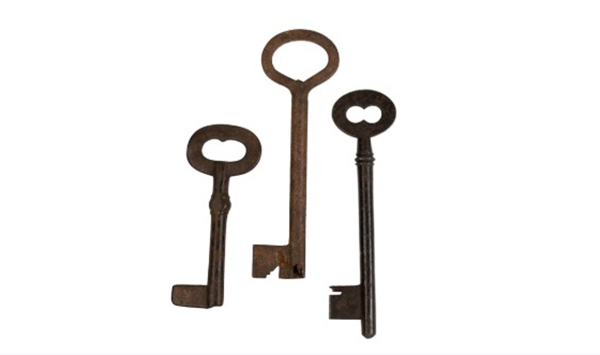
What is this vintage lock-opening tool called?
Unlocking Mental Agility with the Vintage Inventions Quiz and Memory Recall
As we navigate through our golden years, maintaining sharp cognitive health becomes a vibrant, daily journey of discovery. Engaging in regular brain workouts isn't just about solving standard math problems or traditional word searches; it is about kindling curiosity and challenging our visual-spatial reasoning. Taking a interactive Vintage Inventions Quiz offers a unique opportunity to travel back in time while actively exercising the frontal lobe, the region of the brain responsible for problem-solving, context clue synthesis, and logical deduction.
When you look at an unfamiliar object from the 19th or early 20th century, your neural networks fire in dynamic ways. You immediately begin asking: What was this old tool used for? How did people in past eras overcome daily obstacles without modern technology? This process of visual analysis and historical inquiry triggers semantic memory pathways, encouraging your brain to form new synaptic connections. Science shows that novel intellectual challenges mixed with warm nostalgic elements serve as a powerful catalyst for cognitive resilience and active memory preservation.
By participating in this comprehensive challenge, you are not merely testing trivia knowledge, you are engaging in a specialized cognitive routine. Our carefully curated 20-item test combines historical intrigue with targeted mental stimulation. Embracing a regularly scheduled Vintage Inventions Quiz can transform standard leisure time into an exhilarating mental gymnasium, helping keep your processing speed quick, your imagination active, and your mind perpetually youthful.
Why Taking a Retro Gadgets Identification Test Boosts Senior Cognitive Health
Cognitive neuroscientists frequently highlight the principle of neuroplasticity: the brain's remarkable ability to reorganize itself by forming new neural pathways throughout life. Engaging in a structured Retro Gadgets Identification Test serves as an exceptional mental catalyst for older adults. When presented with obsolete household items identification tasks, your brain is forced to look beyond superficial appearances. It analyzes raw materials, mechanical levers, intricate gears, and unusual shapes to hypothesize their original function.
This deep analytical process stimulates associative processing. Unlike simple recall tasks, identifying classic antique tools and gadgets demands that you synthesize visual information with historical context. You evaluate the ergonomics of a bygone era, compare it with modern tools, and draw logical conclusions. This multi-layered cognitive effort strengthens working memory and enhances visual discrimination skills, key components for maintaining independence and mental sharpness during retirement.
Furthermore, completing a Retro Gadgets Identification Test releases dopamine, the brain's natural reward neurotransmitter, whenever you uncover the surprising truth behind a strange artifact. Celebrating these "aha!" moments reinforces positive neural feedback loops, proving that learning and problem-solving remain joyful, high-reward activities at any age. Integrating these regular challenges into your weekly routine provides effective, joyful protection against cognitive fatigue.
Decoding Historical Oddities: How Curiosities Challenge the Aging Mind
The Victorian and early industrial eras were exploding with eccentric ingenuity. Inventors patented thousands of specialized contraptions, from mechanical mustache protectors to hand-cranked butter workers and elaborate egg testing lanterns. Exploring bizarre victorian inventions trivia offers far more than quirky entertainment; it acts as an ideal environment for flexible thinking and conceptual abstraction.
When faced with a strange historical design, the aging brain naturally works to bridge the gap between past and present. You start breaking down the object's features: Why does it have that peculiar spring? What type of physical motion was required to operate it? This systematic mental breakdown enhances cognitive flexibility, the dynamic ability to adapt your thinking when presented with novel, unexpected information. Strengthening this mental agility pays dividends in daily life, improving your ability to adapt to new technologies, troubleshoot household challenges, and maintain dynamic conversations.
Engaging with a well-designed Vintage Inventions Quiz also sparks wonderful intergenerational storytelling. Sharing these bizarre historic solutions with children or grandchildren turns cognitive training into a warm, shared experience. You aren't just training your brain, you are passing down historical perspective, encouraging shared laughter, and demonstrating that lifelong learning is an exciting, vibrant adventure.
Elevating Cognitive Vitality Through a Retro Gadgets Identification Test and Daily Brain Workouts
Building a resilient mind requires variety, engagement, and consistency. While physical exercise strengthens your heart and muscles, participating in a regular Retro Gadgets Identification Test provides essential mental resistance training. Incorporating fun nostalgia brain games for seniors into your daily schedule creates an inspiring rhythm that helps protect against cognitive plateauing and passive mental consumption.
To maximize the cognitive benefits of your brain training session, approach each item like a detective. Before selecting your answer, pause and examine every detail of the image. Ask yourself about the materials used, the ergonomics of the handles, and the potential era of manufacture. This conscious slowing down activates deep processing mechanisms in the prefrontal cortex, transforming a simple game into an intensive visual logic workout.
Making a Retirement leisure history quiz part of your morning routine, perhaps paired with a warm cup of tea or coffee, establishes an invigorating ritual for your mind. Over time, you will notice improved focus, enhanced visual observational skills, and a renewed enthusiasm for discovering new facts. Keeping your brain active and curious is one of the most fulfilling investments you can make in your long-term health and vitality.
Brain Health Check: 5 Signs Your Mind Needs More Novel Challenge
Just as our physical bodies send signals when they need movement, our minds give subtle clues when they are starving for fresh mental stimulation and novel challenges. Recognizing these early signs allows you to proactively introduce engaging cognitive exercises before dynamic thinking habits slip away.
1. Automatic Pilot Overdrive
If your daily routine feels so predictable that you complete chores without conscious thought, your brain isn't forming new neural pathways. Challenging yourself with a high-quality Retro Gadgets Identification Test breaks passive loops and restores active cognitive focus.
2. Loss of Natural Curiosity
A declining interest in asking questions or discovering how things work can indicate cognitive disengagement. Exploring bizarre victorian inventions trivia reignites natural inquisitiveness and encourages playful mental exploration.
3. Slower Visual Processing
Noticing that it takes longer to interpret complex visual layouts or puzzles is a sign that your visual-spatial pathways need exercise. Engaging with obsolete household items identification sharpens visual deduction and spatial awareness.
4. Reduced Conversational Variety
If your social interactions feel repetitive, introducing fresh historical knowledge and classic antique tools and gadgets insights provides exciting, meaningful new topics to discuss with friends and family.
5. Intellectual Comfort Zone Traps
Sticking strictly to familiar puzzle types limits comprehensive brain activation. Trying a novel format like our Vintage Inventions Quiz challenges different brain regions, promoting balanced mental fitness.
Frequently Asked Questions (FAQ)
Taking a specialized Vintage Inventions Quiz activates visual discrimination, contextual logic, and long-term semantic memory simultaneously. Rather than relying on simple rote memorization, participants must evaluate material properties, mechanical functions, and historical context. This multifaceted mental effort fosters neuroplasticity, sharpens problem-solving skills, and keeps executive processing crisp and agile.
While crosswords primarily test verbal memory and vocabulary, a Retro Gadgets Identification Test heavily engages visual-spatial reasoning and inductive logic. By observing unfamiliar shapes and mechanics, your prefrontal cortex works to solve visual riddles: "What was this old tool used for?" This provides a complementary cognitive workout that targets different neural circuits than standard word games.
Yes, absolutely! Engaging in fun nostalgia brain games for seniors requires deliberate observation and sustained attention. Practicing detailed visual analysis on classic antique tools and gadgets trains your mind to filter out distractions and focus deeply. Many participants report feeling more clear-headed, observant, and mentally energetic in their day-to-day activities after regular practice.
It is exceptionally well-suited for social group activities! A Retirement leisure history quiz serves as a wonderful conversation starter among friends, community centers, or family gatherings. Comparing guesses on bizarre victorian inventions trivia encourages warm nostalgia, lively debate, and shared laughter, adding crucial social bonding benefits to your cognitive training routine.
Consistency is key to maintaining long-term mental sharpness. Integrating a short session, such as completing one Retro Gadgets Identification Test or exploring a new set of obsolete household items identification challenges 3 to 5 times per week, yields wonderful benefits. Making brain training an enjoyable, stress-free habit ensures long-term mental vitality and lifelong curiosity.