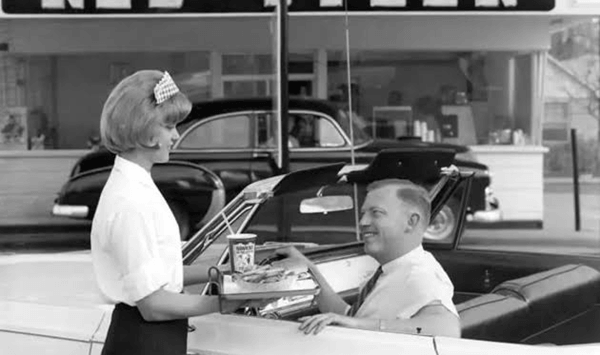
What type of restaurant served food straight to your car?
Unlocking Brain Vitality with the Ultimate Baby Boomer Nostalgia Quiz
Did you know that taking a fun, interactive Baby Boomer Nostalgia Quiz is more than just a delightful trip down memory lane? Neurological research reveals that tapping into deeply encoded memories from our youth triggers a powerful cognitive phenomenon known as "reminiscence therapy." When you actively recall images, places, and cultural moments from your formative years, your brain lights up across multiple neural networks, strengthening synapses and boosting overall mental agility.
For those who experienced Growing Up in the 50s and 60s, the sights, sounds, and physical spaces of that era are anchored in long-term autobiographical memory. Recalling the vibrant neon glow of drive-in theaters, the cheerful hum of local soda fountains, or the distinct aroma of vintage department store lunch counters engages the hippocampus and prefrontal cortex. This mental stimulation promotes neuroplasticity, helping middle-aged and older adults maintain sharp focus and robust cognitive reserve.
At VIGOO.com, we design science-backed brain training exercises disguised as joyful nostalgia challenges. By immersing yourself in a tailored 1950s 1960s Memory Test, you aren't just testing your recall, you are actively feeding your brain the positive neurochemicals, such as dopamine and acetylcholine, needed for optimal cognitive health and emotional well-being.
Explore the Past: Take the Nostalgic American Places Quiz
Mid-century America was defined by iconic architectural marvels, booming suburban main streets, and legendary highway landmarks. Participating in a Nostalgic American Places Quiz allows your brain to practice spatial recognition and visual memory retrieval. When you picture the classic roadside diners or giant drive-in movie screens that shaped Mid-Century American Life, your brain recreates complex mental maps, giving your spatial reasoning skills a high-impact workout.
Think back to the gathering spots that defined your youth. Do you remember the local five-and-dime store where you bought your first record? Can you picture the exact layout of the neighborhood roller rink or the neon-lit bowling alley where weekends were spent? These locations are key milestones in the Golden Age of America Memories. Revisiting them through visual prompts activates visual processing centers in the occipital and temporal lobes.
Engaging with a comprehensive Vintage America Quiz is an enjoyable way to challenge your memory speed. As you identify famous historic venues, regional attractions, and beloved local hangouts, you build cognitive connections that protect against normal age-related memory slip-ups. It is a delightfully energetic brain workout that proves staying mentally fit can be as warm and comforting as a favorite old song.
Challenge Your Recall with the 1950s 1960s Memory Test
How quickly can your brain access information stored decades ago? Taking a targeted 1950s 1960s Memory Test offers a fantastic benchmark for measuring your mental retrieval speed and semantic memory durability. Semantic memory stores general knowledge, facts, and cultural context. Testing this system helps preserve fluid intelligence and problem-solving ability as you age.
If you have ever wondered, "Can You Pass This Nostalgia Test?", the key lies in how well your memory integrates sensory cues with historical facts. Questions focused on mid-century landmarks, classic travel destinations, and neighborhood hot spots challenge your brain to cross-reference visual data with emotional context. Ask yourself: How Well Do You Remember the 1960s? Can you instantly recall the name of the classic motels along Route 66 or the famous World's Fair exhibits that captured the world's imagination?
By regularly practicing with a specialized Baby Boomer Nostalgia Quiz, you build stronger cognitive resilience. Brain training should never feel like a chore or a stressful exam. Instead, combining historical curiosity with game-based challenges keeps your intellect dynamic, curious, and energized for years to come.
The Science of Retro Culture and Memories in Cognitive Health
The relationship between Retro Culture and Memories and long-term brain health is a major topic in modern cognitive science. When older adults share stories about Growing Up in the 50s and 60s, they activate language centers in the brain, improving vocabulary retrieval and narrative fluency. Nostalgic memory retrieval acts as a natural brain stimulant, reducing stress and enhancing mood.
Integrating a fun Vintage America Quiz into your weekly routine offers a structured mental routine. Much like physical exercise strengthens muscles, mental exercise keeps cognitive pathways vibrant. Whether you play individually to beat your best score or turn the Nostalgic American Places Quiz into a lively social game with friends and family, you stimulate executive brain functions while building meaningful social connections.
Ultimately, keeping your mind sharp is about maintaining curiosity and joy. Reconnecting with the landmark places of mid-century America celebrates your unique personal history while giving your brain the essential training it needs to stay vibrant, flexible, and fully charged every single day.
注意点・知っておきたい 5つのサイン
While taking a Baby Boomer Nostalgia Quiz is a fun and stimulating brain exercise, keeping track of your daily cognitive health is essential. Here are 5 subtle signs that your brain might need more regular stimulation and targeted memory workouts:
① Occasional Word or Name Hesitation
Struggling to recall the names of iconic places from a Vintage America Quiz or common everyday terms can indicate that your neural retrieval speed needs a boost through routine memory workouts.
② Difficulty Visualizing Spatial Details
Finding it challenging to picture familiar floor plans or historic landmarks during a Nostalgic American Places Quiz suggests your visual-spatial processing pathways could benefit from visual brain games.
③ Decreased Interest in Social Storytelling
Withdrawing from sharing Golden Age of America Memories or chatting about Growing Up in the 50s and 60s can signal mental fatigue or a lack of positive neural stimulation.
④ Slower Mental Processing During Games
Taking significantly longer to answer simple questions in a 1950s 1960s Memory Test often means your cognitive processing speed could use regular practice and refreshment.
⑤ Reduced Curiosity for Retro Trivia
A sudden decline in enthusiasm for mentally engaging activities, like exploring Retro Culture and Memories, indicates it's time to re-energize your brain with fun, rewarding daily challenges.
よくある質問 (FAQ)
Taking a targeted Baby Boomer Nostalgia Quiz stimulates long-term autobiographical and semantic memory pathways. Recalling details from your youth activates the prefrontal cortex and hippocampus, encouraging neuroplasticity, improving processing speed, and elevating mood through positive dopamine release.
A Nostalgic American Places Quiz relies on visual and spatial prompts, such as vintage drive-in theaters, classic neon diners, and mid-century architecture. Visualizing these physical environments exercises spatial orientation, mental rotation, and visual pattern recognition in the brain.
We recommend engaging in a short brain training challenge or 1950s 1960s Memory Test 3 to 5 times a week for about 10-15 minutes. Consistency is key to maintaining mental sharpness, reinforcing neural connections, and preserving cognitive agility over time.
Absolutely! Playing a Vintage America Quiz with younger family members creates a wonderful intergenerational activity. It allows older adults to share firsthand stories about Growing Up in the 50s and 60s while encouraging younger generations to learn history, boosting social connection and emotional health for everyone involved.
Yes, completely normal! Human memory is selective, and forgetting subtle details over time is a natural process. Asking yourself "Can You Pass This Nostalgia Test?" is meant to be a fun, stress-free exercise. When you discover an answer you missed, your brain forms new associations, making it a valuable learning moment for your mind!