Portland is Oregon's cultural hub, but what Willamette Valley city surrounded by hazelnut orchards is the state capital?
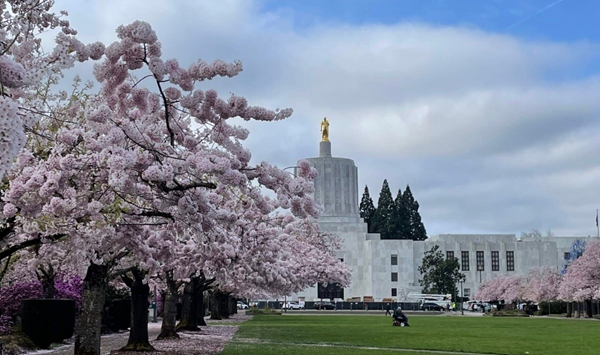
The Ultimate Test of US Geography and US State Capitals: Why New York City Isn't Albany!
Think you know your way around the map? You might want to think again! It is a staggering fact that over 95% of participants fail when tested on basic US State Capitals. Most people instinctively associate a state's most populous or glamorous metropolis with its seat of government. When asked about New York, the overwhelming majority instantly shout out "New York City!" Yet, as any true scholar of US Geography knows, the real capital is the historic city of Albany. This fascinating mental glitch happens because our brains naturally link economic powerhouses with political authority!
Engaging your mind with a lively US Geography Test for Seniors is one of the most exciting ways to challenge these mental shortcuts and supercharge your cognitive agility. When you participate in Trivia Games focused on national map facts, you aren't just reciting names, you are actively reconstructing spatial maps in your brain. Challenging yourself with a high-energy Famous American Cities Quiz forces your prefrontal cortex to bypass quick assumptions and retrieve deeply stored factual knowledge.
At VIGOO.com, we believe that keeping your brain active should feel like a celebration, not a chore! Flexing your memory muscles through interactive challenges helps sharpen your focus, enhances information retrieval speed, and keeps your mind vibrant. So, are you ready to test your knowledge of US Geography, conquer common misconceptions about US State Capitals, and prove that you belong to the elite 5% who can pass with flying colors?
How American History and Trivia Games Stimulate Neural Plasticity in Older Adults
Did you know that taking a journey through American History does wonders for your brain structure? Every time you recall historical timelines, state admissions, or state capitals, your brain forms new synaptic connections. Neuroscientists refer to this remarkable ability to reorganize and build new pathways as neuroplasticity. Participating in regular mental exercises, such as engaging Brain Games for Older Adults, helps preserve cognitive reserve and strengthens overall memory retention.
When you play educational Trivia Games, your brain engages in a process called "active retrieval." Unlike passive reading, active retrieval requires your brain to search through semantic memory networks to pull out specific data points. Reconnecting with stories from American History, like why state legislatures were established in central, smaller towns rather than bustling coastal ports, provides rich context that locks memories in place, making recall faster and sharper for everyday life.
Furthermore, the joy of getting a correct answer releases a wonderful splash of dopamine, the neurotransmitter associated with motivation and pleasure. This positive feedback loop makes learning US Geography incredibly rewarding. By challenging your mind with vibrant quizzes, you are giving your brain a full-spectrum workout that promotes long-term mental sharpness, focus, and intellectual vitality!
Lessons from the History Channel: Unraveling Geographic Myths Through Trivia Games
If you have ever spent an evening enjoying captivating documentaries on the History Channel, you already know that the true story of how American cities came to be is filled with surprising twists. Many people assume that state capitals were chosen based on size or popularity. However, broadcasts on the History Channel frequently highlight how political compromises, geographic centrality in the 18th and 19th centuries, and river trade routes dictated where statehouses were built.
Testing your mental speed with exciting Trivia Games bridges the gap between entertainment and serious brain training. For instance, do you know the capital of California? If you guessed Los Angeles or San Francisco, you fell into the classic geographic trap, it's Sacramento! By untangling these common myths, you actively refine your critical thinking skills and build stronger spatial awareness.
Integrating insights inspired by the History Channel into your daily mental routine creates a vibrant learning ecosystem. When you combine historical context with interactive quizzes, learning about US State Capitals transitions from simple memorization into an exhilarating mental adventure that keeps your mind youthful, curious, and energized!
Boosting Cognitive Fitness with US Geography and American History Challenges
Maintaining peak mental health involves challenging your brain with diverse, exciting tasks. Exploring US Geography offers a unique combination of visual-spatial processing and factual recall, making it an ideal workout for older adults seeking to maintain high mental performance. When you visualize the map, locate state borders, and match them with correct capitals, multiple regions of your cerebral cortex light up simultaneously!
Deepening your understanding of American History alongside map studies adds a rich layer of semantic memory training. Knowing that Springfield is the capital of Illinois because of Abraham Lincoln's political legacy creates strong cognitive anchors. Using specialized Brain Games for Older Adults allows you to practice this knowledge regularly, preventing memory fatigue and boosting mental clarity across all daily activities.
Embracing regular challenges focused on US Geography and US State Capitals guarantees that your cognitive engine stays well-oiled and firing on all cylinders. Celebrate every quiz victory, learn from every tricky question, and enjoy the remarkable cognitive gains that come with lifelong learning!
5 Common Traps in Geographic Trivia & How to Master Them
Even seasoned trivia buffs can get tripped up by sneaky mental shortcuts! Here are 5 common pitfalls to watch out for when testing your memory on national capitals and state geography:
① The "Population Powerhouse" Assumption
Mistaking the largest or most famous city for the capital (e.g., thinking NYC instead of Albany, or Sydney instead of Canberra). Always remember that political centers were often chosen for central location, not population size!
② Relying Only on Passive Media
Watching informative shows on the History Channel is fantastic, but passive watching isn't enough. You must actively test yourself with Trivia Games to build strong neural retrieval pathways.
③ Ignoring Historical Centrality
Forgetting that 18th-century state capitals were selected based on horseback travel distances for farmers and representatives rather than modern highway or airline connectivity.
④ Rushing Through the Questions
Answering instantly based on gut reaction often triggers cognitive traps. Pause, visualize the state map, and recall key lessons from American History before selecting your final answer.
⑤ Neglecting Consistent Mental Workouts
Cognitive reserve requires routine engagement. Skipping regular sessions with Brain Games for Older Adults can slow down recall speed over time. Make fun quizzes a daily habit!
Frequently Asked Questions (FAQ)
Absolutely! A targeted US Geography Test for Seniors stimulates both semantic memory (recalling factual knowledge) and spatial reasoning (visualizing state locations). Engaging these distinct brain areas promotes synaptic strength and supports overall mental agility as you age.
The human brain uses cognitive heuristics, mental shortcuts, to process information quickly. Because famous cities receive the most media attention, our brains automatically associate them with primary importance. Taking a Famous American Cities Quiz helps retrain your brain to look past surface impressions and access precise stored facts.
Consistency is key! Spending 10 to 15 minutes each day playing Brain Games for Older Adults or engaging with Trivia Games yields better cognitive rewards than marathon sessions once a month. Daily practice keeps neural connections active and ready!
When you combine geographical facts with historical context, such as learning facts highlighted on the History Channel, you create meaningful cognitive anchors. Connecting state capitals to key historical events makes the information much easier to store and recall long-term.